Welcome to the first in a three-part series exploring how we can elevate our leadership in the Early Years sector.
In my work coaching Early Years leaders and developing the 9-Step Management Mastery program, I often see managers and deputies wrestling with the same core challenge: time. We are constantly balancing the immediate needs of the children, the expectations of parents, and the operational demands of running a setting.
When we reach Step Three of the Management Mastery program – Effective Delegation: Leading Teams with a Clear Purpose, I usually ask leaders how they feel about delegating. The responses are often a mix of guilt and frustration. Many feel that delegating is simply offloading their own work, or worse, just “asking someone to do their job.”
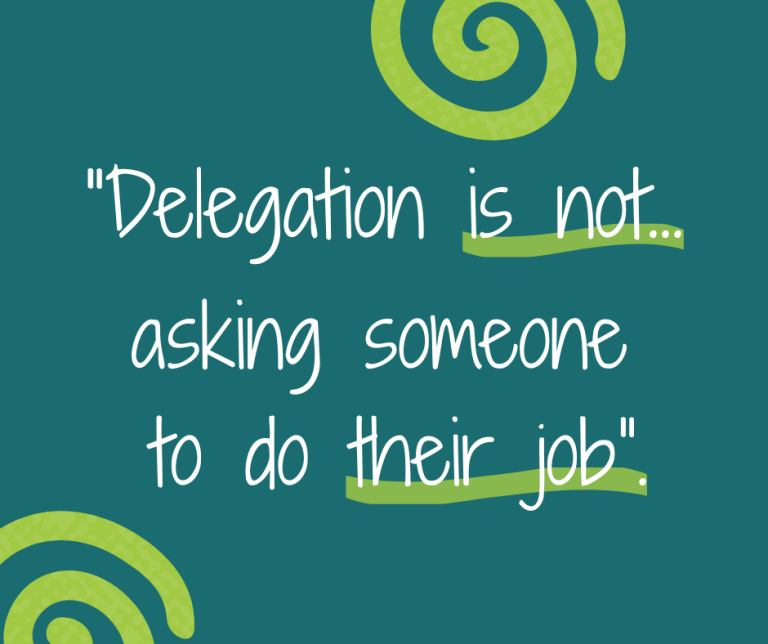
I want to clarify something right now: Delegation is not asking someone to do their job.
If a practitioner is fulfilling their basic job description, that is simply operational management. True delegation is something entirely different. It is a necessary, intentional step in building skills and developing your team’s capability.
The True Purpose of Delegation
Most dedicated Early Years managers don’t wake up intending to reduce their team’s confidence. We wake up thinking about ratios, safeguarding, and ensuring every child has a wonderful day. When the pressure is on, we do what high performers do: we step in, fix the problem, and keep the wheels turning.
But over time, that “stepping in” becomes a habit. We might think we are being supportive, but often, our constant rescuing signals doubt in our team’s abilities. We end up delegating tasks, but retaining all the decision-making power.
When we fail to delegate effectively, decisions bottleneck at the top. Capable room leaders and practitioners learn that their judgment isn’t fully trusted, so they stop thinking in terms of outcomes and start waiting for permission. We end up rewarding “heroic fixing” rather than genuine capability building.
Delegation is not about being hands-off; it is about being clear. It is an operating system that determines how quickly work moves and whether your best people grow or quietly disengage.
A Simple Delegation Framework for Early Years Leaders
To move away from task-dumping and towards true empowerment, we need a structure. Here is a simple, highly effective delegation framework that is easy to apply in a busy nursery environment: Decide / Recommend / Inform.
Instead of just handing over a task, clarify the level of ownership you are giving your team member:
1. Decide (Full Ownership)
You are trusting the practitioner to make the final call.
Example: “I need you to plan the continuous provision for the pre-school room next week in Sian’s absence. You know the children’s current interests best. Decide what resources we need and set it up. You don’t need my approval.”
2. Recommend (Shared Ownership)
You want their expertise, but you need to make the final decision (often due to budget or compliance).
Example: “We have £200 to spend on new outdoor equipment. Please research some options and recommend your top three choices to me by Friday. I will make the final purchase.”
3. Inform (Leader Ownership)
You are handling the situation, but keeping the team member in the loop so they can learn from the process.
Example: “I am going to handle this complex parent complaint. I will inform you of the outcome and the steps I took, so you know how to approach this in the future.”
The Bottom Line
When delegation is done well, two things happen simultaneously: your team’s performance improves because they are genuinely empowered, and you get your time back to focus on strategic growth. Not because the nursery got easier to run, but because the setting stopped depending on one over-functioning leader to hold it all together.
Your coaching challenge for this week:
Look at your to-do list. What are three decisions you are currently making that could safely be moved down one level using the Decide or Recommend framework?
In the next blog of this series, we will explore another crucial step in the Management Mastery journey.
Until then, trust your team, and give them the space to grow.
Where to now?
If you’re ready to feel more confident in your role and lead your nursery team with clarity and calm, the next Management Mastery Cohort starts in June.
It’s a practical, supportive programme designed specifically for nursery managers, with 9 step-by-step modules, real-world tools, and 1:1 coaching to help you navigate the day-to-day challenges of leadership with more ease. You’ll also be learning alongside a cohort of like-minded leaders, so you’re not doing it alone.
Want to stay up to date with News, Ofsted and Regulations?
With the ever-changing regulations and guidance, sign up to our monthly newsletter and mailings to stay current and keep up to date with running your childcare setting.
Simply enter your details below to join our mailing list.
By completing this form you are agreeing to our privacy policy You can unsubscribe at any time
Need help growing your early years setting
Maximise Your Profitability, Strengthen Your Team & Achieve More Balance In Your Early Years Business
Why Verifying References is Now Non-Negotiable Under the New EYFS Safer Recruitment Rules by Imogen Edmunds, Chartered FCIPD, Managing Director, Redwing Solutions.