From Nappy Changes to Transitions: Turning Routine Moments into Language Gold

Share

An image of a baby have its nappy changed as the adult talks to it and the baby smiles and learns language

In the busy, high-energy world of Early Years, it can be easy to fall into a trap of thinking and feeling that “teaching” only happens during planned activities or group times.

Whilst we understand that children’s spoken language underpins all seven areas of development, evidence is clearer than ever that the most profound linguistic development doesn’t happen during planned interactions, it’s happening in our every day routines such as nappy changing, meal times or even at the garden door!

These moments are our ‘Routine Moments’ and when approached intentionally, they are absolute pedagogical gold, helping practitioners navigate the golden thread of communication and language.
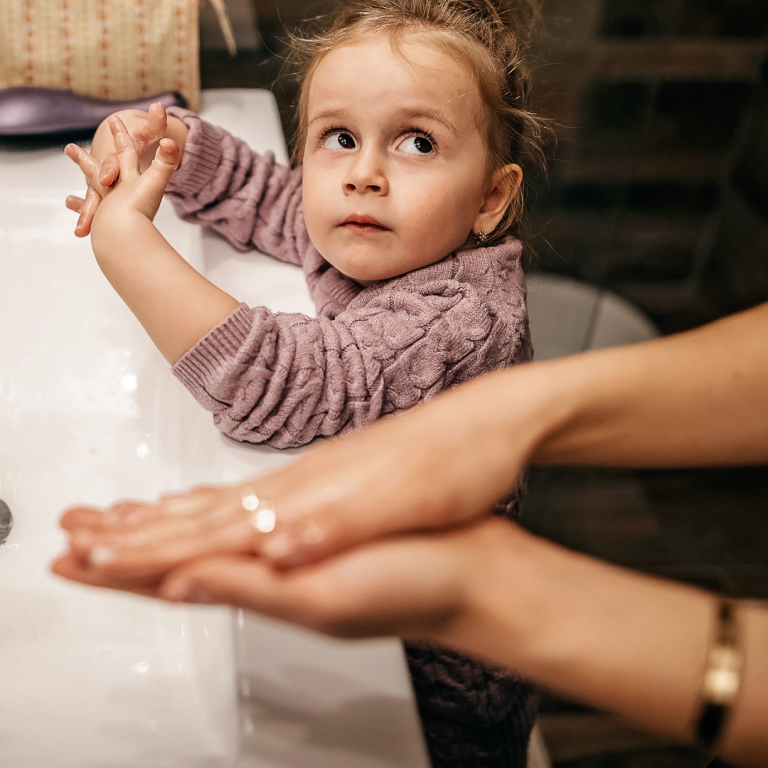
A preschooler washing their hands as an adult models the language

Why do routine moments matter?

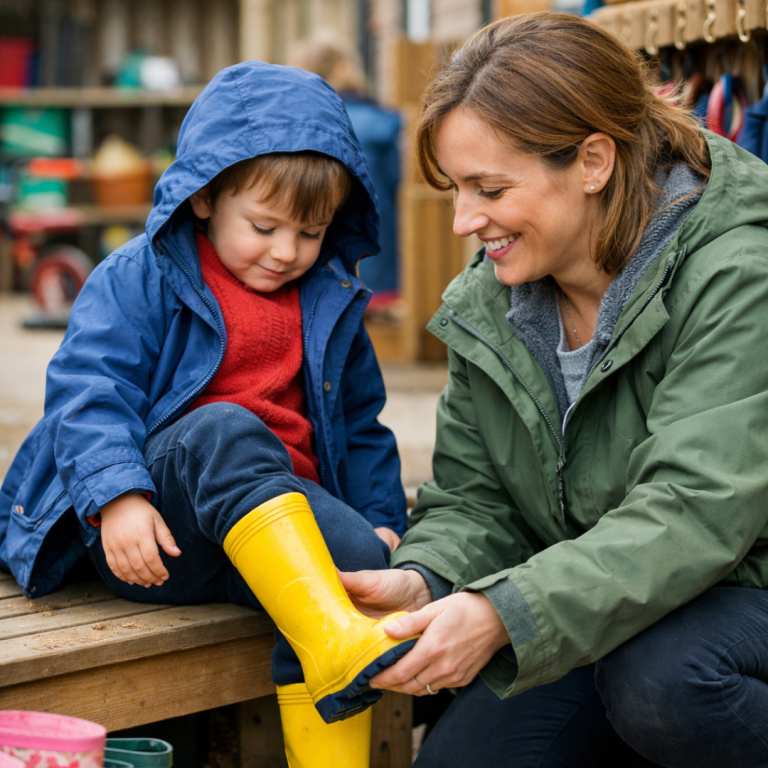
For a child, a nappy change or putting on their welly boots for the garden isn’t a gap in their learning day, it is a moment where they are often one-to-one with their key worker or a practitioner. In these moments, the background noise can drop away and the conversational weave can begin.

The 2026 inspection focus has shifted heavily toward the quality of back-and-forth interactions. Inspectors aren’t looking for how many words you say at a child, they are looking at how many turns a child takes with you in your interactions together.

So, what can this look like in practice?

An adult talking to a toddler as they have their nappy changed to model language

1. The Nappy Change:

A nappy change is the ultimate ‘Serve and Return’ opportunity. Instead of rushing through a conveyer belt of nappy changes from one child to the next, treat this time as a shared project between you and the child. We know time is precious so we are not suggesting altering routines to ‘make more time’, remember this is about intentional and meaningful routine moments, making small yet impactful tweaks to your everyday practice.
  • The Narrative: narrate what you are doing, but leave gaps for the child to fill. For example, saying “I’m going to untie this…(pause)…knot!’ During this time, the eye contact you have with the child is likely the most consistent one-to-one time a child gets, use it to model complex facial expressions and phonetic sounds that are harder to hear in a noisy play space.
  • Respectful Pedagogy: Asking “is it ok if I help get you clean now?” models the language of consent and agency from the earliest age. An often overlooked yet fundamental skill which when taught from the earliest age supports so many other areas such as, building emotional safety and trust – teaching children that their body belongs to them, helps with behaviour and regulation, and can also support safeguarding and reduce vulnerability, to name but a few.
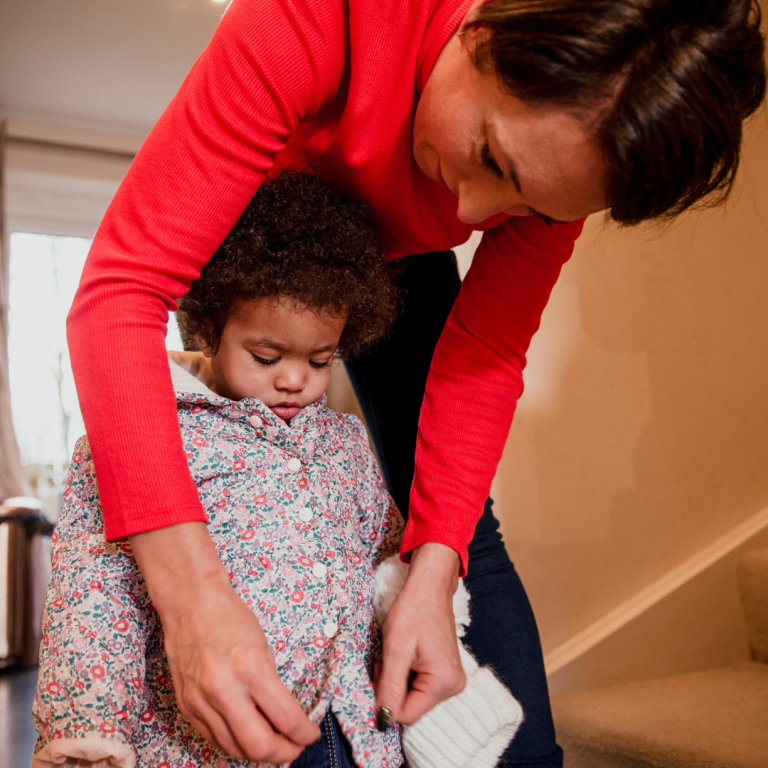
An adult helping a child with their coat

2. Transitions – The in-between language

Transitions (moving from inside to outside, or play to lunch, one activity to the next) are often moments where children need more support, and adult language can naturally become more functional and directive, “put your coat on”, “time to line up” for example. If we practice, we can become skilled at flipping this.
  • The ‘First/Then’ bridge: you can use transitional moments to build temporal language “First, we are washing our hands, then, we are finding our placemat” The first/then bridge helps children move through the day with clarity, confidence, and less overwhelm, while supporting routines in a gentle, respectful way.
  • Song cues: Research shows that melody aids language retention. A consistent handwashing song or garden time song allows children to predict the language and eventually lead the singing themselves.
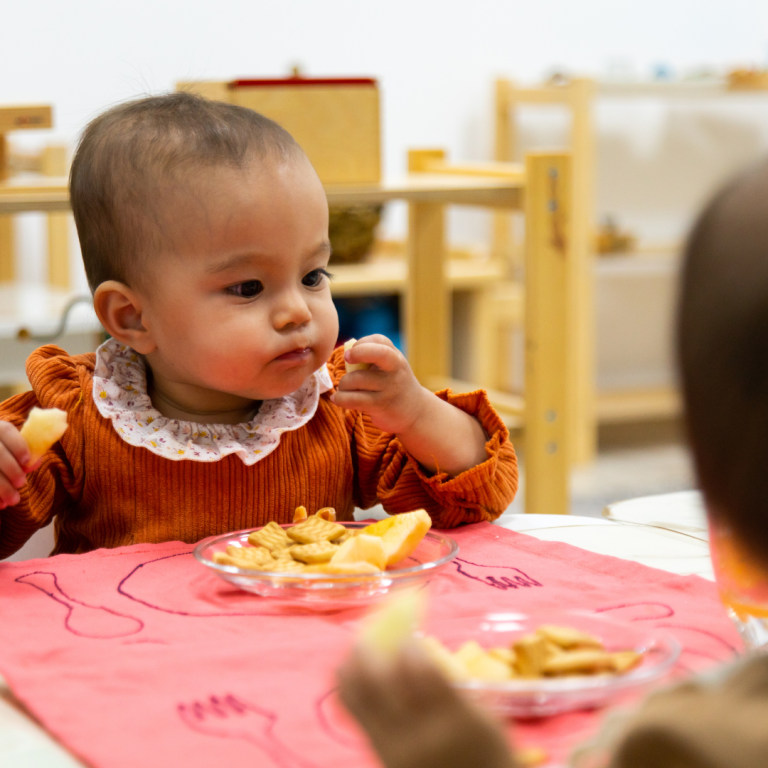
An image of 2 preschoolers sitting at a snack table eating fruit and snacks together

3. The snack table – A social laboratory!

In early years, mealtimes really are the “original social media” because they’re one of the first spaces where children experience a shared community, identity, and communication happening in real time.
  • Move from ‘Directing’ to ‘Wondering’: Instead of making statements or asking “what colour is your apple” try reframing the question as, “I wonder why Jaxon’s apple has red skin, but yours has green?” or “I wonder why the satsuma drips juice when you squeeze it but the apple doesn’t?”.
  • The vocabulary of senses: Don’t shy away from ‘big’ words. A mistake we often make is worrying that children won’t understand the words we use, but introducing new and complex vocabulary during early years is vital. Children are linguistic sponges, if you use new words, they will eventually own it – use crunchy, tart, refreshing, sticky or fibrous when describing, this is such a simple way to teach children new vocabulary.
An adult helping a child put their wellies on

Time to reflect.

So, next time you find yourself rushing through a routine to get back to the ‘real play’, ask yourself, is there any other time in the day where I have this child’s undivided attention? 

When we value routine, we value the children, and in that value, language flourishes.

Top tips:

Wait for the return – After you speak (the serve) wait 5-10 second. Give the child time to process and offer a sound, gesture, or word (the return).

Reduce the ‘instructional voice’ – try to have fewer “do this” moments and more “let’s see” moments.

Get level – whether at the sink or changing mat, ensure your mouth is visible. Seeing how you form sounds is a vital part of their phonic mapping.

About the Author - Michelle Kendall McGuire

Michelle Kendall McGuire

Michelle has worked and progressed within the early years sector for nearly 25 years, and is our newest consultant here at MBK Early Years, having joined us in January 2026. 

Michelle has managed multiple teams, progressing through roles such as Childcare and Education Manager, Head of Early Years, and Company Childcare Director, where she was the Ofsted nominated individual for 106 nurseries. 

Of all her achievements, Michelle is most proud of the work she has done with teams and individuals to help them reach their full potential.

Where to now?

Find out about our Supporting Communication and Language In the EYFS training, which enables practitioner to:

  • To understand what is meant by the term’s communication and language and how this impacts their learning.
  • To use positive interaction strategies to support children to access all areas of the curriculum and build confidence to express themselves.
  • To be able to create a language rich environment and take opportunities to develop communication skills throughout the day.
  • Have an awareness of what SLC (Speech, Language & Communication) difficulties look like and where to get support.

Want to stay up to date with News, Ofsted and Regulations?

With the ever-changing regulations and guidance, sign up to our monthly newsletter and mailings to stay current and keep up to date with running your childcare setting.

Simply enter your details below to join our mailing list.

Keep In Touch Short (Newsletter Form)

By completing this form you are agreeing to our privacy policy You can unsubscribe at any time

Tricia Wellings 1

Need help growing your early years setting

Maximise Your Profitability, Strengthen Your Team & Achieve More Balance In Your Early Years Business

Related Articles

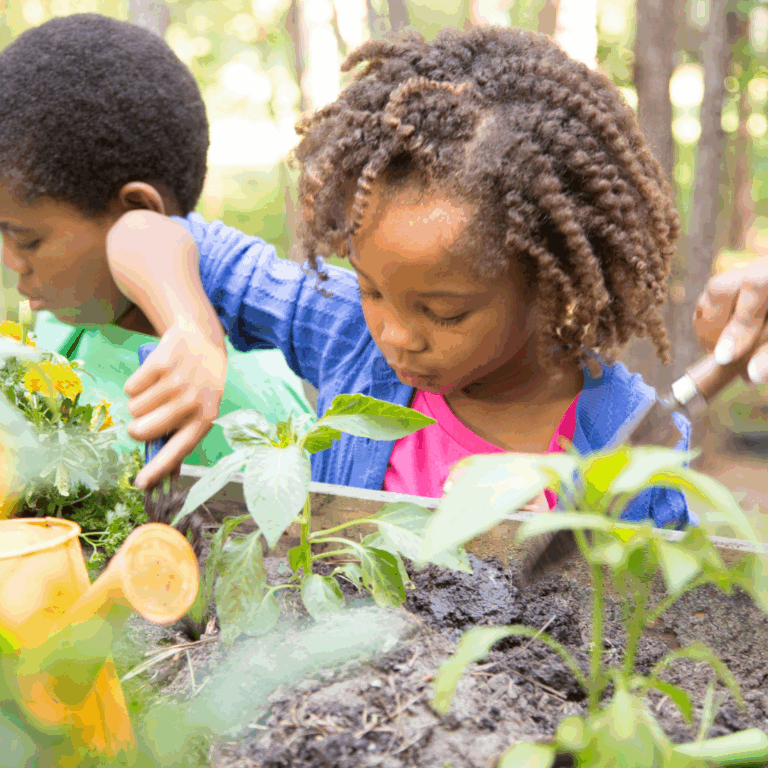
An image of 2 preschoolers engaged in outdoor activity of watering and planting seeds

The Government Checks Boxes, Early Years Educators Understand Children

This week, the Education Secretary has once again placed “school readiness” at the forefront of the early years conversation. The...
Boys running in field

Beyond the Labels: Nurturing Boys’ Potential in Early Years

Walk into any nursery across the country, and you’ll see them—the boys who burst through the door full of energy,...
An image of an action plan with goals and targets.

Fresh Beginnings: Empowering Your Early Years Team for the Year Ahead 

Hello 2025! The New Year is here, offering a perfect opportunity to reflect on your journey so far and refocus...

Added To Cart